









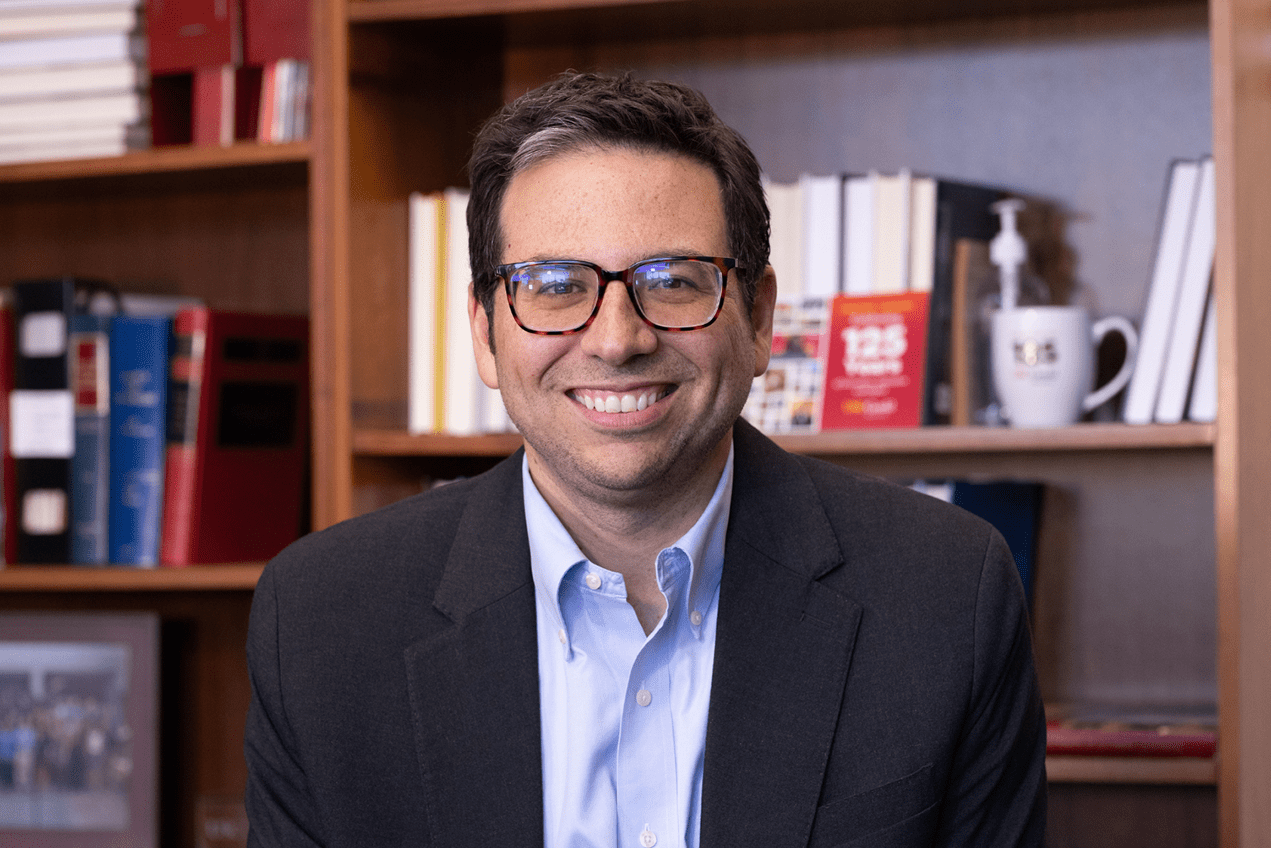
Felipe Jiménez’s research spans private law theory and general jurisprudence, with an emphasis on comparative legal analysis across common law and civil law systems. His forthcoming book, “The Institution of Contract,” offers a new integrated theory of contract law. He co-directs USC Gould’s Center for Law and Philosophy and organizes the cohort’s annual conference on legal theory. Jiménez received the AALS Section on Jurisprudence Article Award for 2025 and has presented at Berkeley’s Kadish Colloquium in Law, Philosophy & Political Theory and the UCLA Legal Theory Workshop.
Please introduce yourself.
Felipe Jiménez, Professor of Law and Philosophy at USC and Co-Director of the Center for Law and Philosophy.
What is your interpretation of law and philosophy? How would you describe it to someone who didn’t know about this specific niche?
In my view, there are two forms of legal philosophy. One form tries to apply the insights from areas like the philosophy of language, moral and political philosophy, and metaphysics to legal questions. The other, which is the one I am more interested in, relies on philosophical tools to examine the nature and justification of law and legal institutions. I have relied on this approach, for example, in my forthcoming book The Institution of Contract, which tries to offer a new and integrated theory about contract law.
Can you briefly describe the focus of your research? What gap in existing knowledge do you hope to fill or add to with your scholarship?
My research focuses on broadly two topics: private law theory and general jurisprudence. In each case, I try to broaden the perspective of legal theory to include a comparative dimension (and therefore to focus not just on American law but also on other common law systems and civil law systems as well) in order to generate a better, more informed understanding of the nature and value of legal systems as a whole, and of particular legal institutions and doctrines.
Tell us a bit about your motivation for your specialty area and how you arrived at Gould.
I have been interested in philosophy since high school, and in legal philosophy since law school back in Chile. I came to the U.S. to study legal philosophy and contract theory and, after working for a bit as a lawyer in international arbitration, was lucky enough to get a job at Gould.
What do you hope your students take away from your courses? What would success as a professor look like for you?
My hopes are two. First, I hope that my students learn that, at the basis of many practical legal problems, there are important and difficult questions about the nature of language, the structure of the social world, the justification of coercion, and moral and political values like freedom and equality. Second, I hope to instill in my students the relevance of lawyers and the legal profession in sustaining the rule of law and the protection from arbitrariness and domination that it promises.


 Previous Article