

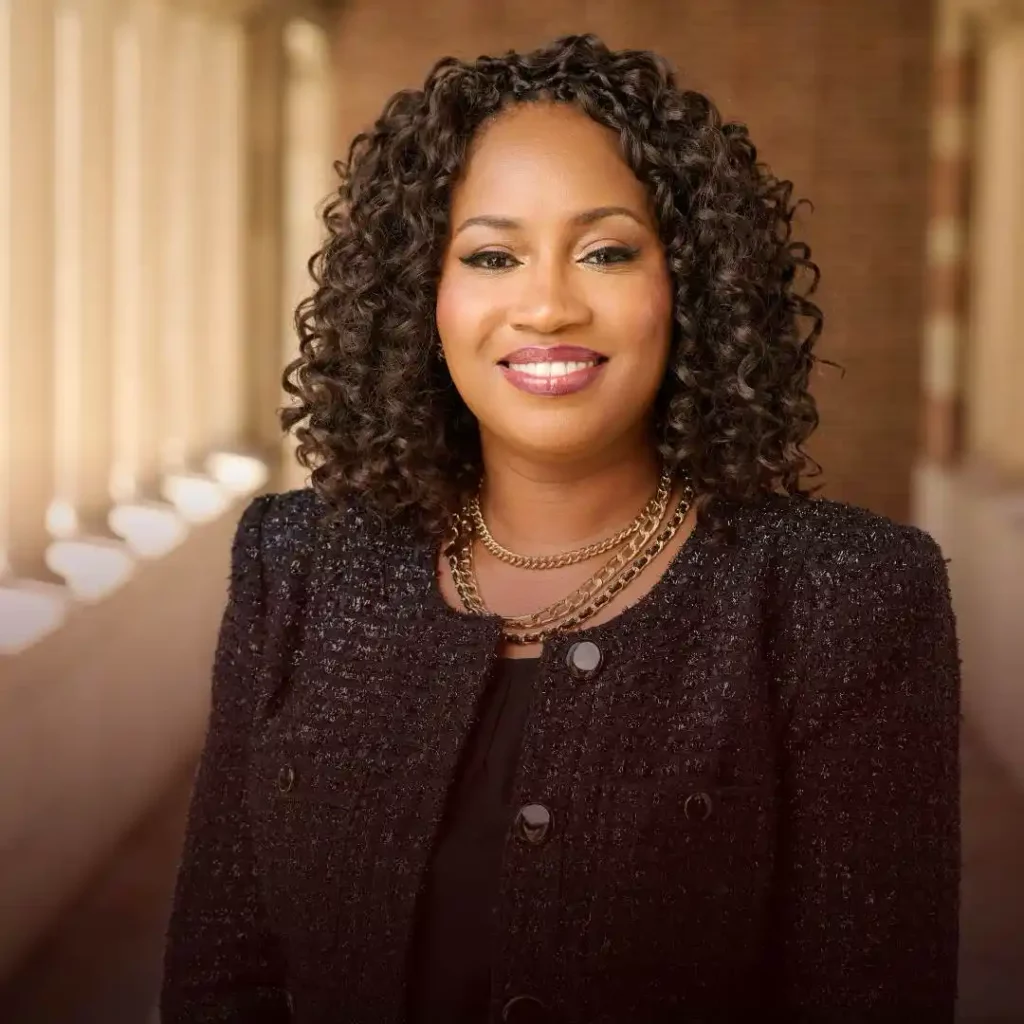







Chuck Arvin (MSL 2026) who works at the intersection of data science, machine learning and AI, pursued USC Gould’s Online Master of Studies in Law (MSL) through his employer’s partnership with USC Gould’s Corporate and Custom Education programs to better understand the legal and policy foundations behind the technologies he builds. Read the Q&A below to learn how the program strengthened his approach to problem-solving, sharpened his legal reasoning, and gave him a broader perspective on the real-world implications of AI.
What made you pursue the MSL at USC Gould School of Law?
I work in data science, machine learning and AI applications. In my field, you can know all the math and technical implementation details, but if you do not understand the law, policy and the “why” behind carefully building these systems, you are missing a critical piece. I wanted that foundation to build these systems with a broader, more thoughtful perspective.
USC Gould’s Online MSL was the right fit because it gave me access to a top-tier legal education while allowing me to continue my professional work. The flexibility of the online format meant I could pursue this learning without putting my career on hold.
What was your experience balancing your Online MSL coursework with your professional and personal commitments? What strategies helped you to succeed?
This program requires serious work, so discipline and a consistent schedule were essential. For me, Saturday mornings became my dedicated time to get coursework done for the week. The program’s structure helps: classes are in the evening so they fit around a full-time job, and the structure of discussions, small group work and peer interactions makes them lively and interesting. Sometimes work demands made it impossible to attend live, so the recorded classes were helpful as well. If I needed to, I could catch up from planes, hotel rooms or wherever else. That flexibility was key to making the most of the program.
What is your most memorable experience from your studies at USC Gould?
It is really hard to pick just one, as I enjoyed learning about such a variety of topics. I can now think through whether something qualifies for copyright protection, spot cyber risks, or analyze if something infringes on the Fourth Amendment. These are completely different legal frameworks and being able to navigate across them is just interesting and fun.
If I had to pick one experience, it would be the research paper I wrote on geo-fence warrants in LAW 804: Information Privacy Law, in which law enforcement requests location data from companies to identify everyone near a crime scene. The legal questions are genuinely hard: our privacy frameworks weren’t designed for a world in which we generate a constant, passive trail of location data. And there are complex technical edge cases too — is running a database query a “search” under the Fourth Amendment? It felt like working on something live rather than a textbook exercise.
Looking back, what aspects of the program provided you with the most unexpected value?
Honestly, I thought law school would be about learning all the laws, but what I really gained was a systematic approach to problem-solving. How do I “issue spot” and find the relevant laws? How do I analyze them? How do I present my results? Legal research, structured thinking like IRAC, writing with clarity and precision: that’s what you actually learn. The MSL added a different kind of rigor, reasoning about rights, intent and harm in addition to technical performance. It’s made me much more effective at breaking down complex problems and communicating solutions, and that’s valuable well beyond just legal work.
How has your Online MSL given you an advantage in your career?
The MSL has changed how I think about my work — the legal and policy lens has given me a different perspective on the implications of what I build. For example, I have published research showing that AI tutoring tools sometimes agree with students even when they are wrong, which creates a real equity problem: the same tool might help knowledgeable students learn faster while reinforcing misconceptions for struggling students. I think more now about how these systems can fail or mislead users in ways that are not obvious from the technical performance alone. The field is moving fast enough that the legal and policy questions are only going to get more interesting.
What advice would you give to prospective students who are interested in pursuing their MSL?
USC offers a ton of class options and you will probably find that a lot of them sound interesting. My advice is to be intentional about where you dig in. Have a sense of what aligns with your career or what you’re curious about, and work with the program team to craft a curriculum around those goals. You cannot take everything, so focus on what matters to you.
What sparked your interest in learning about law and legal concepts?
I have always been law curious. I did moot court in undergrad and studied judicial politics before pivoting to data science. I even considered USC for a JD before going to graduate school. Along the way, my work kept brushing up against legal questions: privacy, fair lending, IP. The interest never really went away. The MSL just made it possible to act on it.
Learn more about Corporate and Custom Education Partnerships, scholarships and opportunities. Email corporatecustomed@law.usc.edu.


 Previous Article